|
EK-3C

When choosing an orthopedic product, the quality processes behind its production matter just as much as its design, materials and comfort. For medical distributors, healthcare professionals and users, regulatory compliance and traceability are essential considerations.
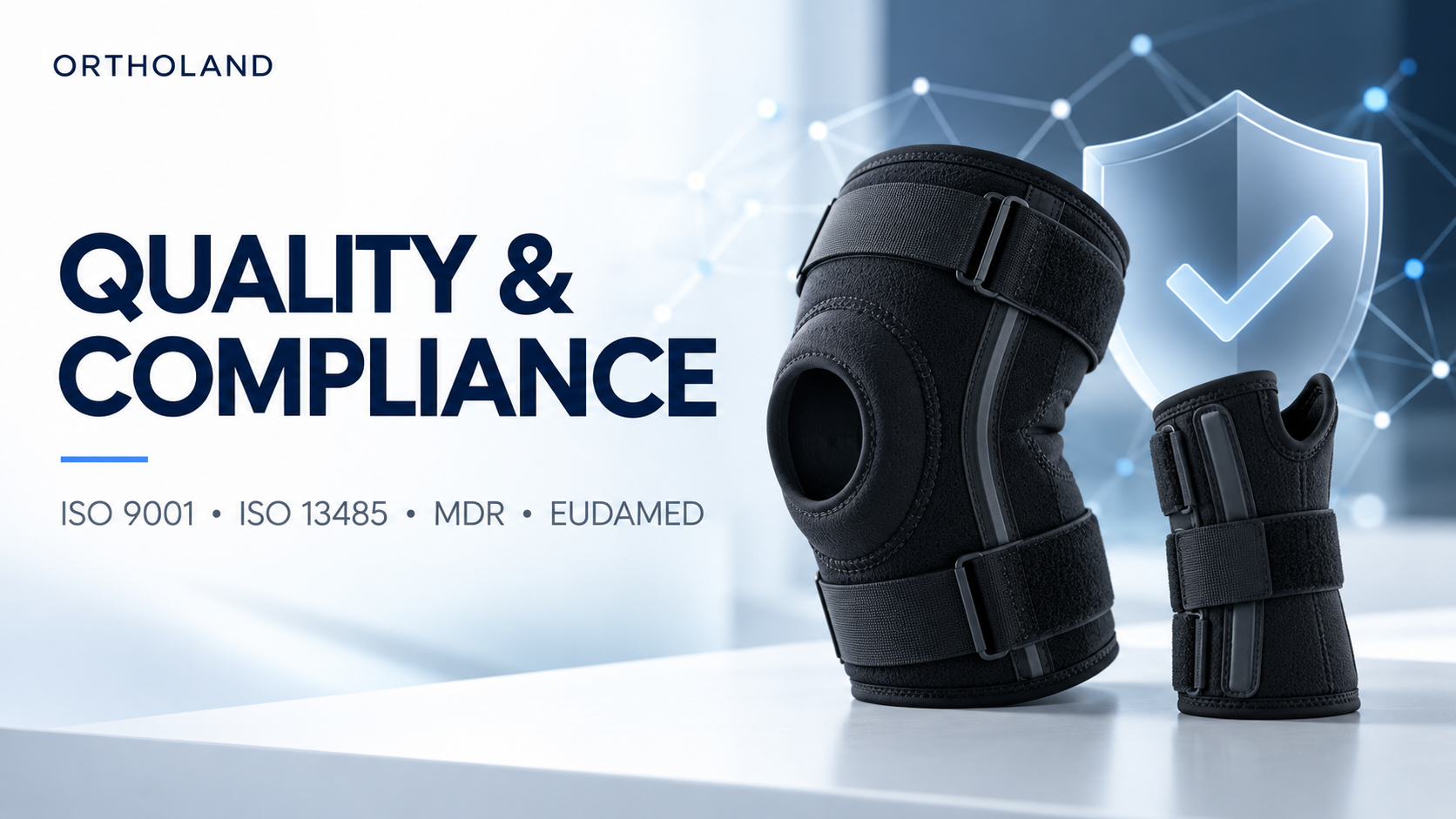
Four terms frequently appear in this context: ISO 9001, ISO 13485, MDR and EUDAMED. Each serves a different purpose, covering quality management, regulatory requirements, registration and traceability.
Understanding these differences helps buyers evaluate products and manufacturers more effectively.
ISO 9001 is an international standard that defines quality management system requirements for organizations across different industries. It focuses on understanding customer needs, managing processes, evaluating performance and continual improvement.
In orthopedic manufacturing, this approach helps connect purchasing, production, quality control and customer feedback within a structured management system. Quality becomes part of the entire operation, extending beyond final product inspection.
ISO 9001 certification evaluates an organization’s quality management system within its defined scope. It does not constitute individual safety or performance approval for every product.
ISO 13485 is a quality management system standard specifically developed for the medical device industry. It focuses on an organization’s ability to consistently provide medical devices and related services that meet customer needs and applicable regulatory requirements.
The standard provides a structured approach to documentation, risk-based process management, supplier controls, production records and feedback handling.
When assessing a manufacturer’s ISO 13485 certificate, distributors should review its validity and the organization, activities and product categories covered by its scope.
ISO 13485 certification alone does not replace CE marking or the applicable product conformity assessment process.
MDR refers to Regulation (EU) 2017/745 on medical devices. It establishes requirements for the safety, performance and placing on the market of medical devices in the European Union.
Manufacturers’ responsibilities include device classification, risk management, technical documentation, clinical evaluation and post-market surveillance. CE marking indicates conformity with the applicable requirements.
The conformity assessment route depends on the device’s classification and characteristics. For certain Class I devices, manufacturers may issue an EU Declaration of Conformity after meeting the relevant requirements. Other cases require the involvement of a notified body.
Therefore, asking whether a product has an “MDR certificate” is not sufficient. Its classification, EU Declaration of Conformity and, where required, notified body certificates should be reviewed together.
EUDAMED is the European Database on Medical Devices. It brings together information concerning medical devices, economic operators and related regulatory processes.
Since 28 May 2026, the use of the following four EUDAMED modules has become mandatory:
Actor registration
UDI/device registration
Notified bodies and certificates
Market surveillance
Specific obligations depend on the parties’ roles and the applicable transitional provisions.
UDI stands for Unique Device Identification. It supports the identification and traceability of medical devices, while EUDAMED provides the regulatory infrastructure for managing relevant device and registration information.
EUDAMED registration is not a quality certificate or, by itself, a product approval. It serves a different purpose from ISO certification and CE conformity assessment.
| Framework | Main purpose |
|---|---|
| ISO 9001 | Defines general quality management system requirements for organizations. |
| ISO 13485 | Defines quality management system requirements specific to medical devices. |
| MDR | Establishes legal requirements for medical devices in the EU market. |
| EUDAMED | Provides a database supporting registration, information sharing and traceability. |
A reliable supply relationship requires more than competitive prices and suitable product specifications. Buyers should also assess the documentation supporting the products.
The manufacturer’s identity, intended purpose, applicable conformity documents and labeling should be consistent. Quality management system certificates should be checked for validity and scope.
Instructions for use, traceability information and after-sales communication processes are also valuable parts of a supplier assessment.
Together, these checks help distributors and healthcare professionals make informed purchasing decisions.
At Ortholand, we recognize the importance of clear information about product specifications, quality management and regulatory requirements.
Whether you are reviewing an orthopedic product range or exploring a distribution partnership, understanding the supporting documentation is an essential part of the process.
Contact our team to learn more about Ortholand products, request relevant documentation or discuss distribution opportunities.